


EIP created this interactive inventory to make it easier for the public and advocates to find environmental compliance information and permit records related to integrated steel mills and coke oven facilities, which have long been some of the dirtiest manufacturing sites in the US. Integrated steel mills are facilities with blast furnaces and basic oxygen furnaces that convert iron ore into steel. (This is in contrast to “minimills” that use electric arc furnaces to recycle steel scrap into new steel.) Coke oven facilities heat coal in the absence of oxygen to create coke, which is used in blast furnaces.
The interactive inventory highlights 21 facilities, their Clean Air Act and Clean Water Act compliance status, access to current and pending permit documents, air emissions data, and links to other websites and resources of interest. EIP periodically updates this data. See the interactive inventory and map for information about the latest update.

Click here for interactive web map with data on integrated steel and coke oven facilities.
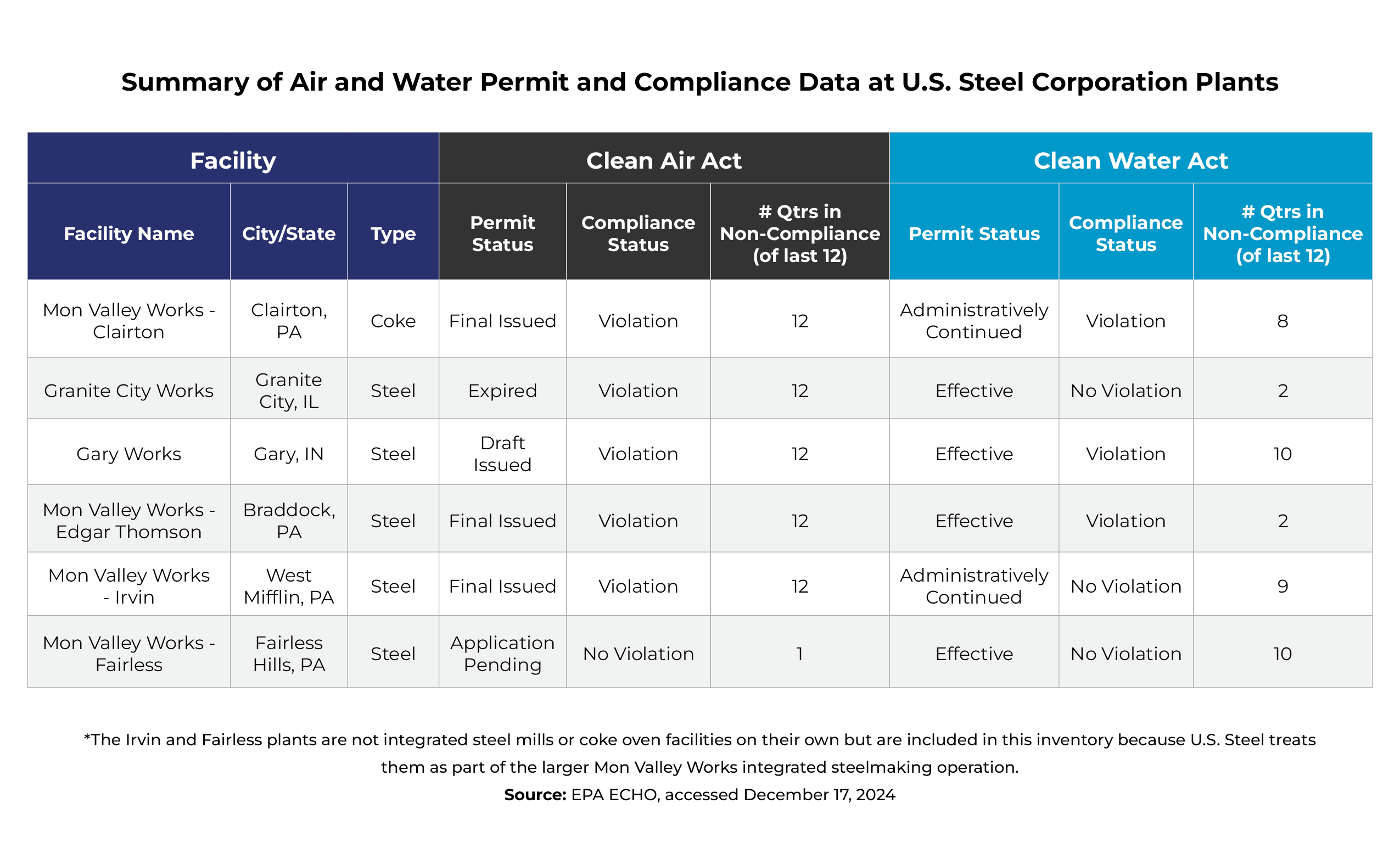
The table below shows the kinds of information available on the interactive inventory at facilities owned by U.S. Steel Corporation, for example. Available information includes Clean Air Act and Clean Water Act permit status, compliance status, and compliance history over the last three years (12 quarters). Users can also access facility-level information like facility location, year constructed, number of enforcement actions, total penalties issued within the last five years, wastewater pollution violations, and more. For example, from 2020-2024, the six U.S. Steel plants were collectively subject to 50 informal and formal enforcement actions and assessed $12,700,530 in penalties for Clean Air Act and Clean Water Act violations, according to data from EPA’s Enforcement and Compliance History Online (ECHO) database.
About the Data
Permit data includes the name of the permit, status of the permit, and permit expiration date. Clean Air Act permit information reflects Title V operating permits. Clean Water Act permit information reflects that of individual National Pollutant Discharge Elimination System (NPDES) permits. Some facilities may have other types of Clean Air Act and Clean Water Act permits. Available permit documents are accessible through the link at the bottom of each table and obtained from relevant state agencies. Enforcement and compliance data are from EPA’s Enforcement and Compliance History Online database (ECHO) and includes each facility’s compliance status, the number of state or federal compliance evaluations in the last five years, number of enforcement actions initiated against it, and total penalties assessed within the last five years. Air emissions data are from EPA’s Toxic Release Inventory, EPA’s Greenhouse Gas Reporting Program, and state emissions inventories. EIP will periodically update data. See the interactive inventory and map for information about the latest update. Users can refer to the ECHO Data Dictionary for more information about compliance and enforcement data.
