



[vc_row][vc_column][vc_empty_space height=”12px”][vc_column_text]
What We Do >> Oil and Gas >> The Human Cost of Energy Production >> Fracking >> The Dubanksys
[/vc_column_text][vc_column_text]
Organic Farmers Don’t Want Drilling on Their Doorstep
Walking the Backbone Food Farm, located in Oakland, Maryland, with Katharine Dubansky and her two youngest children, it’s easy to see the appeal of organic farming.
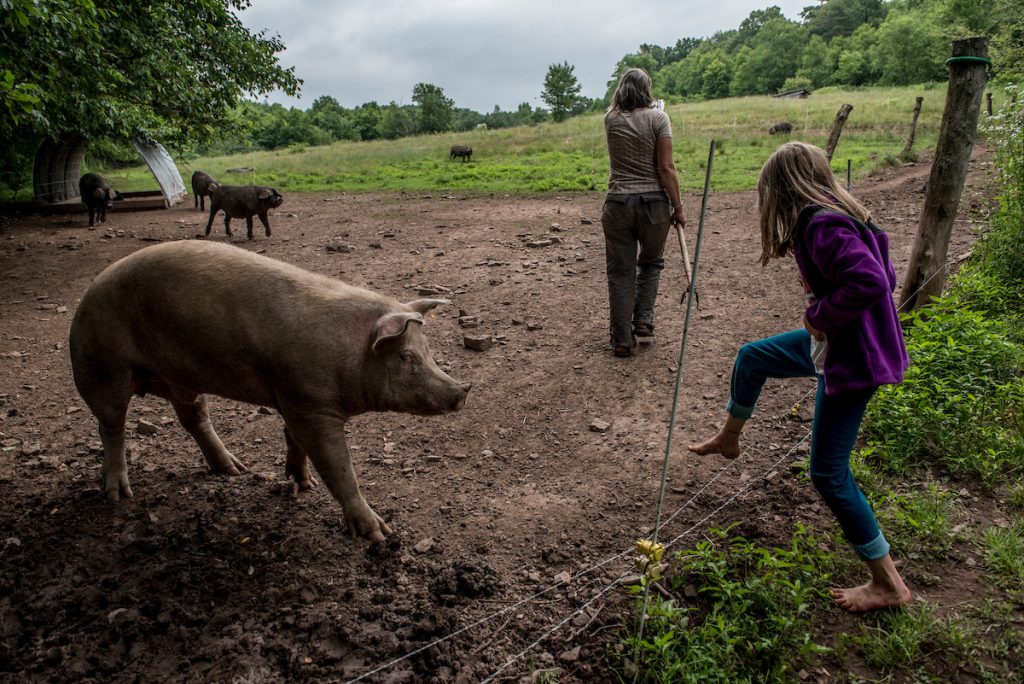 Alongside field after field of vegetables, there are pens and pastures where pigs, goats, sheep, and cows while away their days. The wind turbines on Backbone Mountain that produce kilowatt after kilowatt of clean power stand sentinel over the property, as though in tribute to and guardian over the Dubansky’s production of sustainable, safe food. Because it’s early summer, little piglets slip the fence and run loose. Eventually, one of the many free-roaming Dubansky dogs will scoot the piglets back under the fence, squealing, toward their mothers.
In a way, Backbone Food Farm is emblematic of the appeal of western Maryland. Although most farms in this valley are not organic, there are very few factory farms or other large-scale, industrial farming operations in this part of Garrett County. The terrain is rugged and mountainous and doesn’t always yield easily to a plow. According to Katharine, most of the farmers in the Oakland area are reformed Amish. Like her Amish neighbors, Katharine is strong and hearty. She has capable, intelligent eyes and walks with an easy confidence.
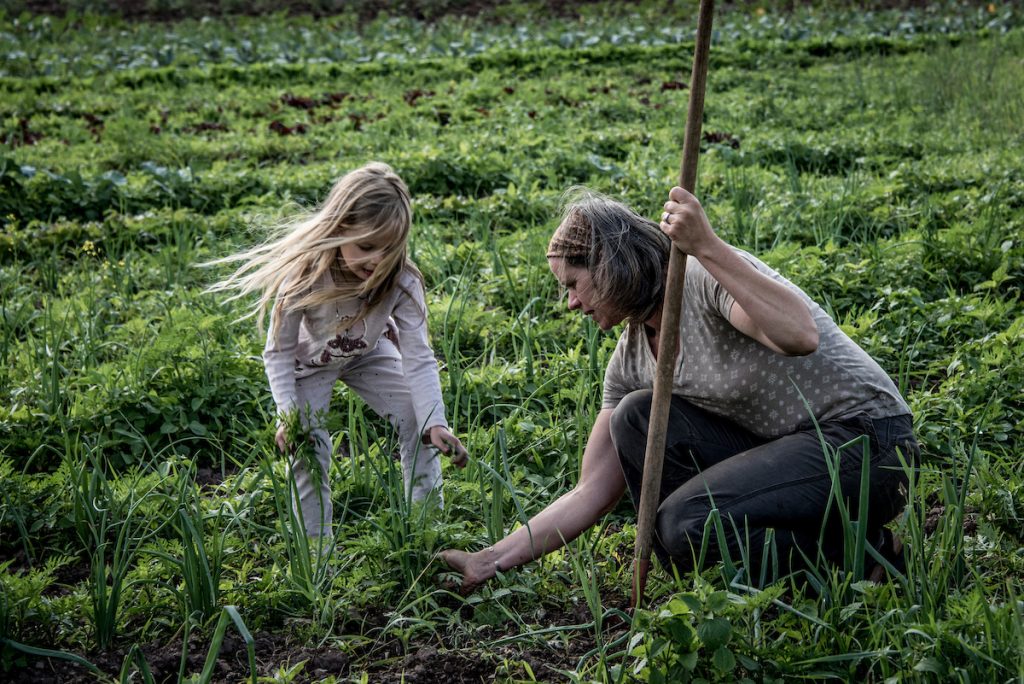 She and Max came to organic farming quite naturally. Max’s father was an organic farmer in Grantsville and he was working another organic farm in Flintstone, Maryland when he and Katharine were introduced through mutual friends. Young and unafraid of hard physical work, their interest in organic farming grew as their relationship blossomed. Katharine, who had recently graduated from college, gave up her intended career as a teacher to pursue their mutual dream.
As she attends to chores, Katharine explains that an energy company may construct a compressor station – a large, industrial complex used to transmit compressed natural gas through a pipeline – just a mile and a half from their farm. If the fracking ban is lifted, private property leased to oil and gas companies will be drilled. Once production begins, more and more compressor stations and other infrastructure, like pipelines, storage tanks, impoundments, processing plants, and ugly elbows of pipe that protrude from the ground called “pig launchers” will litter the landscape. As has happened in western Pennsylvania, small towns will be overrun with railcars and endless lines of trucks carrying explosive natural gas liquids.
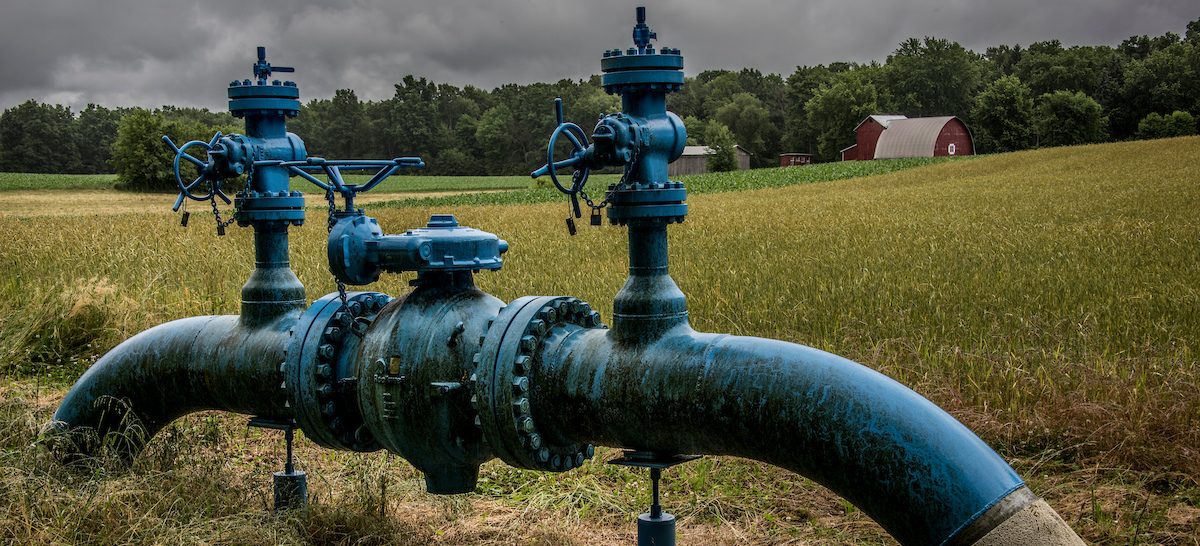
Industrial equipment, like this gas pipe (called a “pig launcher”) has spread across farmland in Western Pennsylvania with the growth of hydraulic fracturing. Residents of Western Maryland fear their countryside will also be littered with such infrastructure.
It’s hard to imagine what the threat of fracking means to these hardworking, earnest people. Katharine and Max’s entire lives are bound to their 106 acres of land. Their oldest daughter, recently graduated from high school, bought sheep with her graduation money and intends to stay on and manage the livestock. Even their beloved but departed milk cows remain fixtures in their lives and on this farm, their sun-bleached skulls adorning the red-picket fence that runs alongside their farmhouse. As the two youngest girls, Tessa, 6 and Iris, 9, show off their new litter of bunnies, Katharine whispers her concern. “How can …flares and diesel fumes work here?”
 A supporter of Citizen Shale, she is opposed to fracking and doesn’t want to see western Maryland ravaged in pursuit of a finite quantity of natural gas. She considers herself an environmentalist and understands the risks that fracking poses to both her financial livelihood and health. She is not a NIMBY (“not in my back yard” ) person who objects to any kind of energy development near her farm. For example, she had no problem with the construction of the large wind turbines on the ridge over their property a few years ago. But she is worried that the oil and gas industry would introduce more intense disruption of their lifestyle – with pollution, noise, and truck traffic.
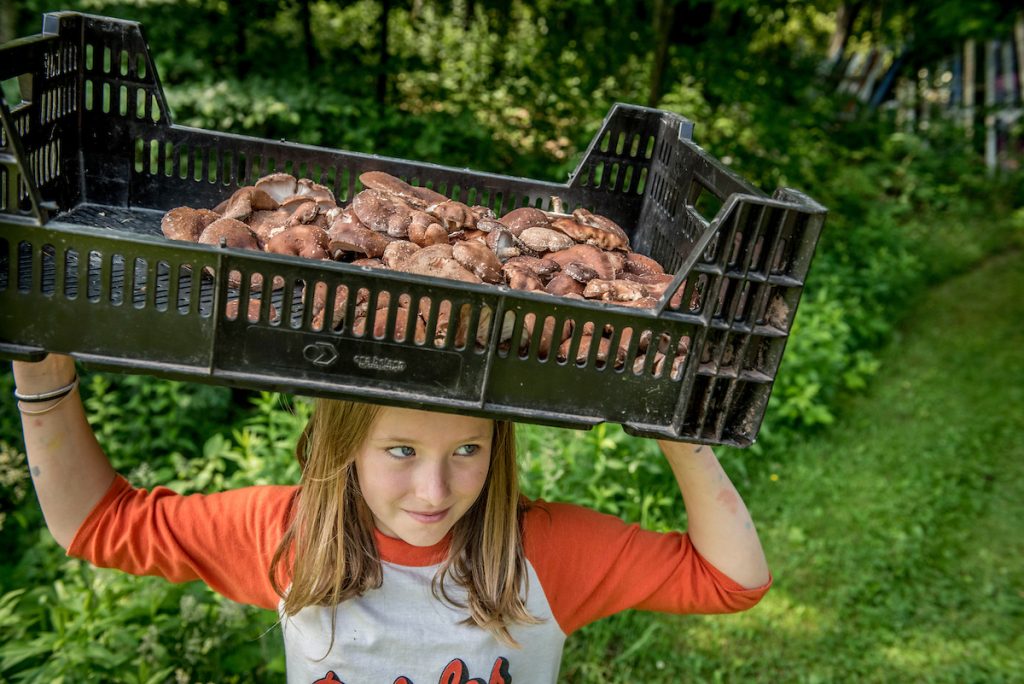
Katharine is also torn over how vocal she can be. She and Max sell their meat and produce, including beautiful mushrooms grown in the wooded portion of their farm, mostly at the local farmers markets. Many of the patrons come from Deep Creek Lake, the wealthiest community in Garrett County. “Those folks make the drive because they know they’re buying safe, healthy, locally grown food. Fracking will destroy that,” Katharine explains as she shows off the rustic cottage on the property they rent to cross-country skiers in the winter. “But at the same time, I risk alienating the relationships I have now with customers and other vendors if I get too mouthy about it.”
Most of the elected officials in Garrett County are pro-drilling, and for the most part, the county is more conservative than the rest of the state. As lawmakers and citizens continue to debate the pros and cons of opening western Maryland to fracking, people like the Dubanskys will need to decide where they stand, and how strong their voices will be. For now, Katharine is watching, listening, and boning up on her research.
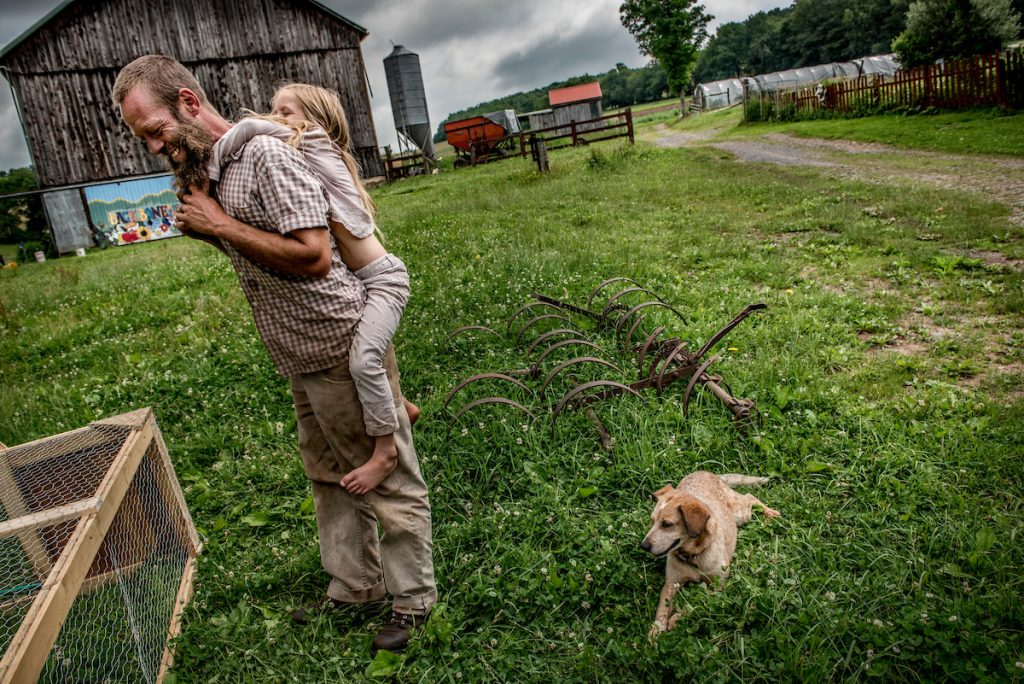 As she walks back toward the farmhouse, where she finds Max taking a break to give Tessa a piggyback ride and twirl her around, she contemplates her next move.
With earth-stained hands on hips and feet firmly planted on the ground, she admits: “I may have to jump into this thing whole hog. But I have to be careful. I can get quite passionate.” [/vc_column_text][/vc_column][/vc_row][sgmb id=”3″][/vc_column_text][/vc_column][/vc_row]
