


[vc_row][vc_column][vc_empty_space height=”12px”][vc_column_text]
What We Do >> Oil and Gas >> The Human Cost of Energy Production >> Fracking >> The Durans
[/vc_column_text][vc_column_text]
Farm Family May be Driven from Land by New Crop: Gas Processing Plants
It’s Father’s Day and Vicki Duran’s twin sons are bailing hay on the family farm.
Three of her four surviving children live on parcels carved from the original 110-acre property in Smith Township, PA that she and her husband Timothy bought in a “fire sale” in 1973, when she was 24. They worked hard to forge a life together and build a future for their children. Sam and Dan are strong and handsome at 36. They both speak with earnest thoughtfulness. Though Sam has a slight edge in height, their similar looks, body language, and ability to complete each other’s sentences belie their status as fraternal twins. Neither is afraid of hard, back-breaking work. Both are naturally likeable.
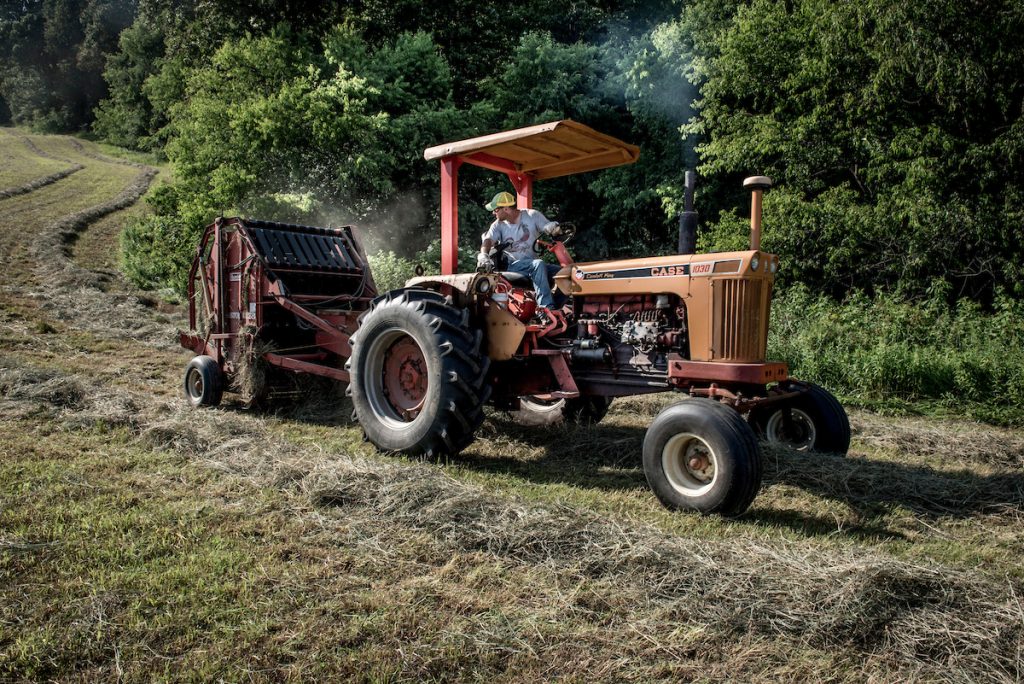
The hum of the bailers is barely audible over the incessant buzzing of the cicadas that have emerged like a plague upon a family and a landscape that have already seen their fair share of hardship. Vicki‘s voice rises above the circadian symphony as she sits at the red picnic table outside Sam’s home. “Getting excommunicated from everything you have left is pretty rough,” she says. It’s a powerful way to begin what would become a multi-day conversation centered around how fracking is threatening their family in a way that other extractive industries never have. As she’s quick to acknowledge, Sam’s daughter Ayla, 4, may soon be looking from her bedroom windows at two different but massive natural gas processing plants that could be built soon.
It’s a sentiment rarely discussed but shared by many farmers in SW Pennsylvania: fracking is threatening – and in some instances destroying – their way of life. The Pennsylvania Farm Bureau, the state’s primary agriculture lobby group, is in favor of fracking in the Marcellus Shale region, in part because it brings royalties to some farmers struggling to keep their farms afloat. But fracking is far more than just an economic issue. And it comes with a different price tag altogether, including for many who do not get any royalties: the incredible noise when a well is fracked, heavy truck traffic, endless rail cars filled with explosive oil and gas, compressor stations, noxious flares, pipelines, unsightly “pig launchers” (large metal elbows of pipe that jut from the ground) diesel engines, processing plants the size of large neighborhoods, and in many instances, falling property values, air and water pollution, and health problems, including asthma attacks. Fracking is disruptive to families and is causing more and more multi-generational farmers, like the Durans, to weigh whether it makes sense to try and tough it out or move away. Even though a few farms with leases benefit financially, everyone who lives near fracking-related activity is heavily impacted, regardless of who has signed a lease or who objects to the drilling.
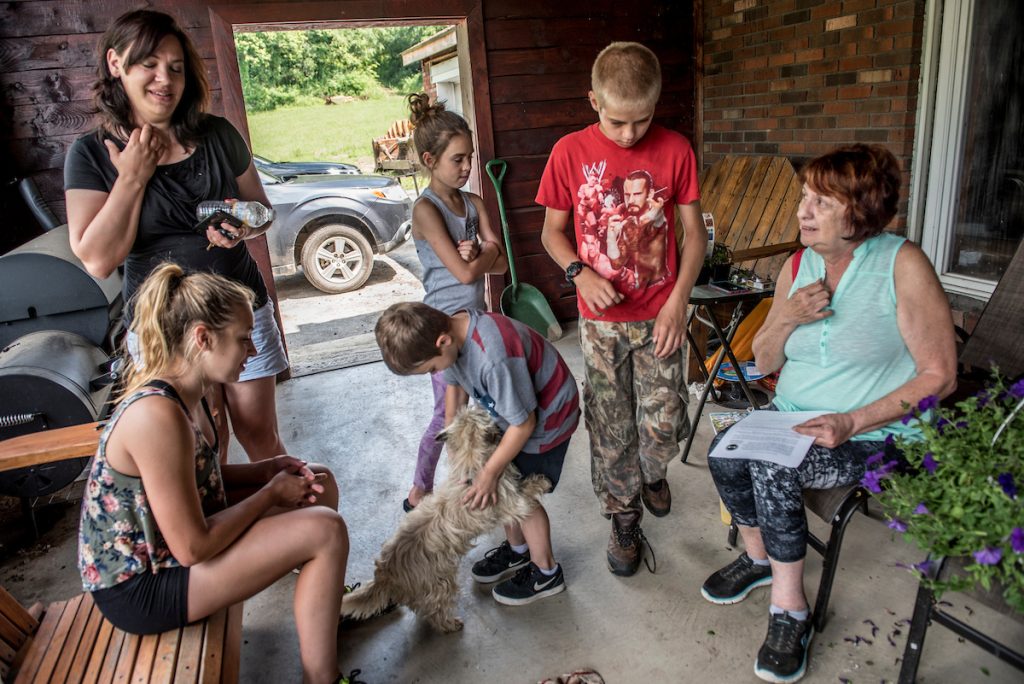 Vicki understands this all too well. She is open and transparent and peppers her thoughts about oil and gas expansion with poignant reminiscences. Edging into her upper 60s, it’s clear she’s carrying a lot of grief. In 2012, her husband Timothy died of colon cancer. A year later, a brain aneurism took one of their daughters. As though that weren’t enough, she recently lost her best friend. The strain of sharing these losses shows on her pale, lightly freckled face and she fumbles absently with a pack of cigarettes until she finally pulls one out and smokes. The daughter of a physician, Vicki married a coal miner who dreamed of becoming a farmer. It was a decision that she admits set her life on a path different from the one her parents envisioned for her. But as she pushes back her sassy, ruby-red hair and smiles at the throngs of grandchildren playing tag and “pickle” as the teens remain indoors, glued to their phones, it’s difficult to discern too many regrets. She interrupts the conversation briefly to admonish one of the older girls for being rough with a younger cousin, and this seems to sweep her melancholy away. “We had fun together,” she shrugs ruefully. “Tim was quite eccentric.”
Then, as her back straightens and her eyes pop with scorn, she exclaims, “But I’m not ready to give up – I’m not going to just lie down and die.” Timothy built their home and cleared the fields over the years with help from a favorite uncle and their growing sons. Several decades later, she and her children – and their children, are bound to the land in a way few people understand and even fewer have the privilege to experience.
On another visit, she offers a tour of her new kitchen, remodeled entirely by Sam and Dan and her daughter Abby’s husband. “Of course,” she pauses, looking toward the sink, “we don’t drink the water.” According to Vicki and Dan, they’ve had their wells tested and the results showed “some high readings.”
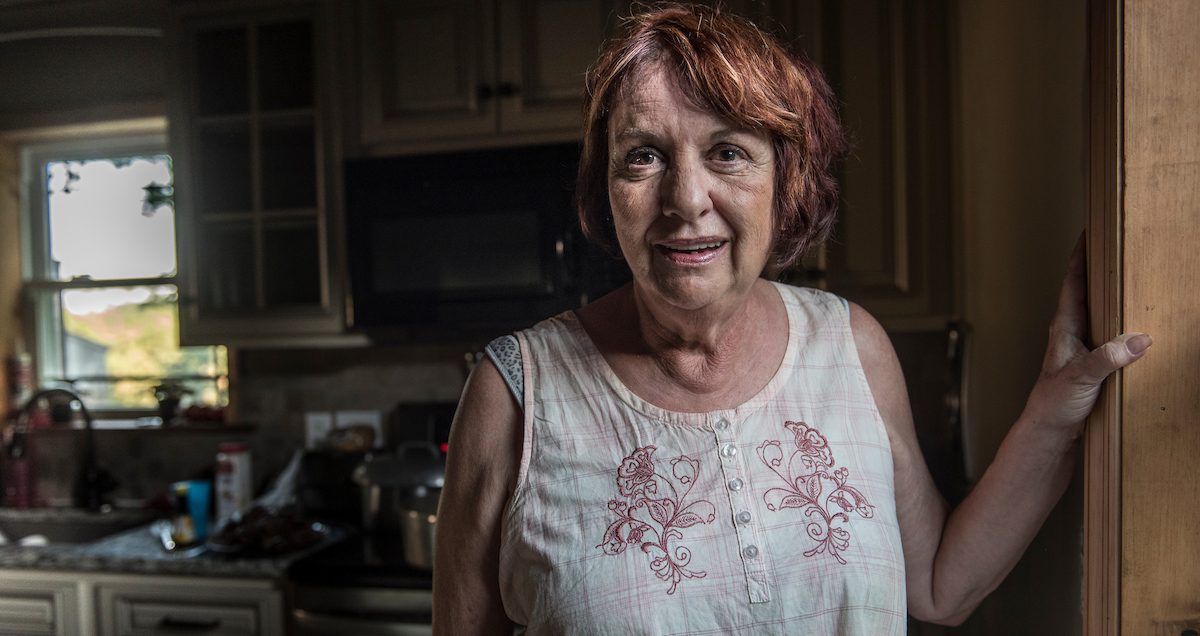 “We just go on,” she sighs. “And we get our water sent in.”
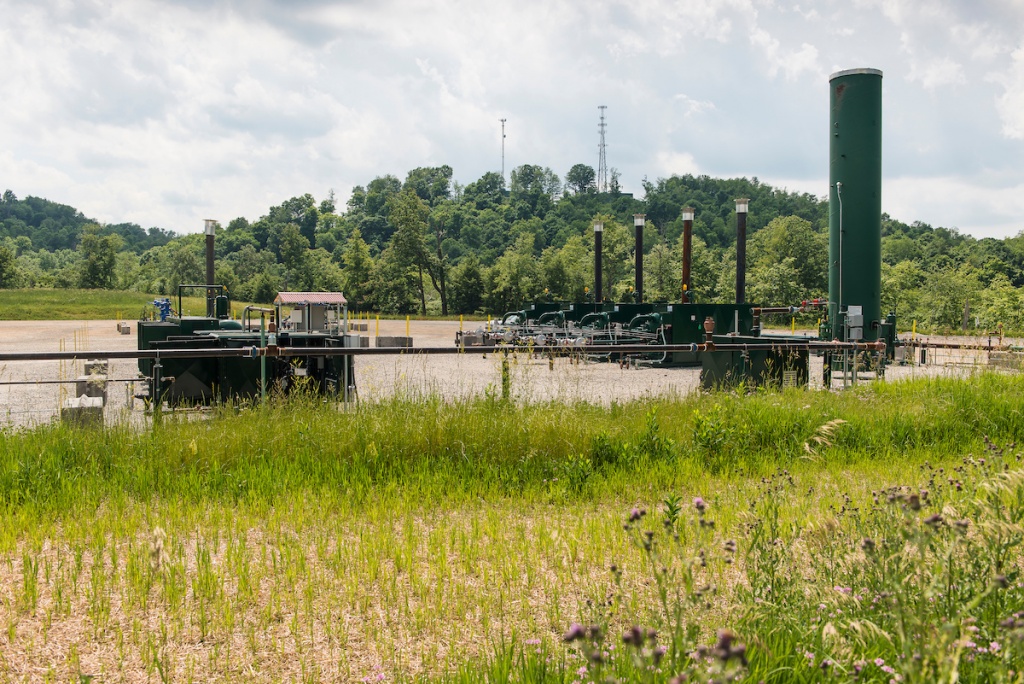 Their property is surrounded by oil and gas wells, and those are connected to pipelines that snake beneath the surface at almost every turn. Thousands of miles of pipelines, in fact, have been laid in this part of Pennsylvania, the yellow and orange posts that mark their locations, some candy-cane shaped, never far from sight. With the help of pig launchers and compressor stations, the pipelines transport the gas to local processing plants. Land that isn’t actively drilled is leased, for future drilling. “Right now the gas is going to Houston [a processing plant in Washington, PA] – but soon it’ll be going to Fox and Revolution.” What Vicki’s referring to are the proposed natural gas cryogenic plant sites owned by ETC and MarkWest, two major players in the Marcellus Shale region of Pennsylvania. After explaining that she could actually feel a well being drilled from a nearby lease from inside her bathroom, she shakes her fist and shouts “It’s close, and it’s killing us!”
Sam’s wife Kasey, who has listened quietly but with intent, finally feels compelled to join in. “I’m finished with those people,” she says. Speaking of the oil and gas operators in her area, she adds “they’re getting nasty toward us.” She complains that the seemingly endless parade of trucks from the well pads has run her and Vicki off their rural country lane on multiple occasions. As she leans in and watches her blonde, curly-haired daughter carry their cat across the picket-fenced yard, she admits that she doesn’t know how they would evacuate the farm in time should an accident occur at one of the many wells that surrounds their property or at one of the processing plants, if they’re built. “We wouldn’t even be able to hear the sirens from here,” she laments. A young mother, Kasey’s also worried about the school – and its close proximity to the blast zone – should something go wrong. Ayla will be starting kindergarten before too long and the ETC plant, if built, will be a little over a mile from the school, as the crow flies.
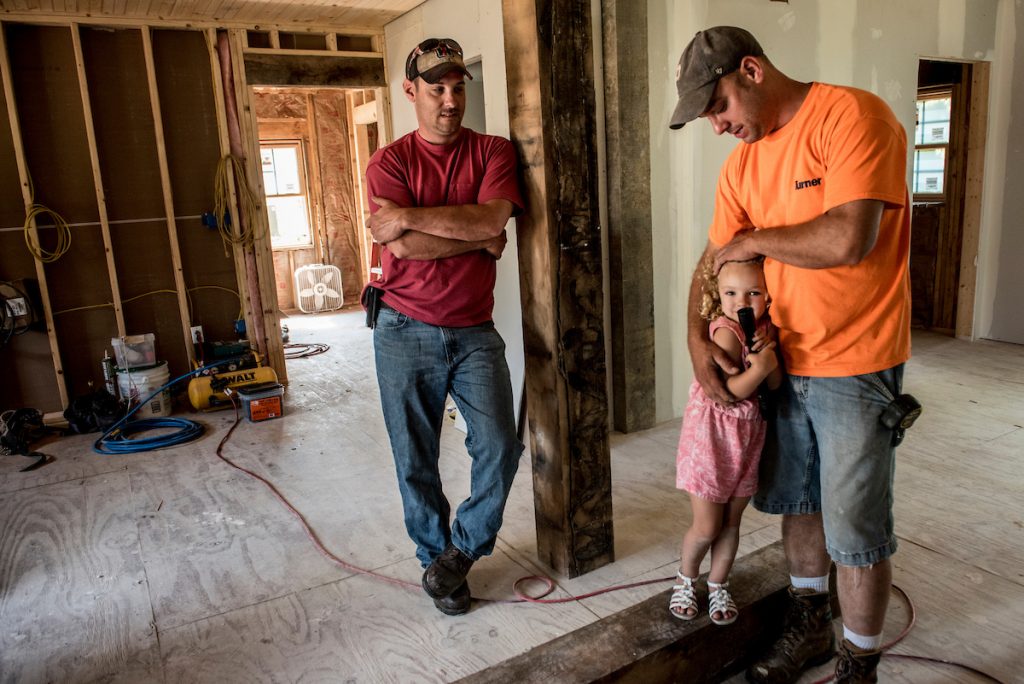
As the days on the porch unfold – sometimes at her house and sometimes at her son’s, Vicki worries that her family may be running out of options. The twins, Sam and Dan, work from dawn to dusk to keep the farm going. None of them is resigned to a life beyond and without their land. Dan works as an electrician and Sam is employed by the municipal sewer authority. But both are farmers by vocation and they return to the land, to their chores, and to their projects, every day after work and on the weekends. Despite the unrelenting encroachment of oil and gas production to their way of life, they continue their quiet but dogged resistance. Dan continues to build a house, with help from his brother. He and his wife Ann have a three-year old daughter and a baby boy on the way. He’s passionate and outspoken about how the oil and gas industry threatens their quality of life. “This is what our dad taught us to do,” Sam implores, as he uses his cap to swipe the sweat from his brow. “You need to know that this is what we know, this is the only way we know how to live.” This connection to their land, to their farm, this drive to keep building as their family grows, shapes their decision-making; a shared imprint that won’t be dislodged.
Like the rest of the family, the twins don’t necessarily view themselves as environmentalists. They grew up working side by side with their father and great-uncle, who at one time, ironically, owned the land atop the hill where the ETC plant may soon be built. It was land promised to the boys but according to Vicki, somehow got taken away from them and sold after their great uncle’s death. Knowing that the ETC plant could be built – and possibly the MarkWest plant as well, looms over their lives like a cancer. Knowing that they may be unable to stop these plants from being constructed is a bitter pill to swallow.
Like their parents before them, Sam and Dan have built their lives and their families on the premise that if they worked hard, paid their taxes, tried to be good neighbors, and kept their heads down, they would be alright. That the family could stay together, on their land, for the rest of their lives. That these boys, along with their sister Abby, would be able to watch their children’s children grow into their birthright. That their mother Vicki, a bona fide matriarch, would grow old in the comfort and care of her kids and grandkids. The connection to the land is evident in the way Dan talks about his hopes and fears for the future, in the way his voice falters when he broaches the subject of when and if the family will be forced to split up and make their way, for the first time in four generations, on their own. Perhaps more than anything else, the connection is evident in the faces of the children, cousins and siblings who crisscross the summer terrain in tandem, content to their core with the knowledge that they belong to something bigger and stronger than themselves.
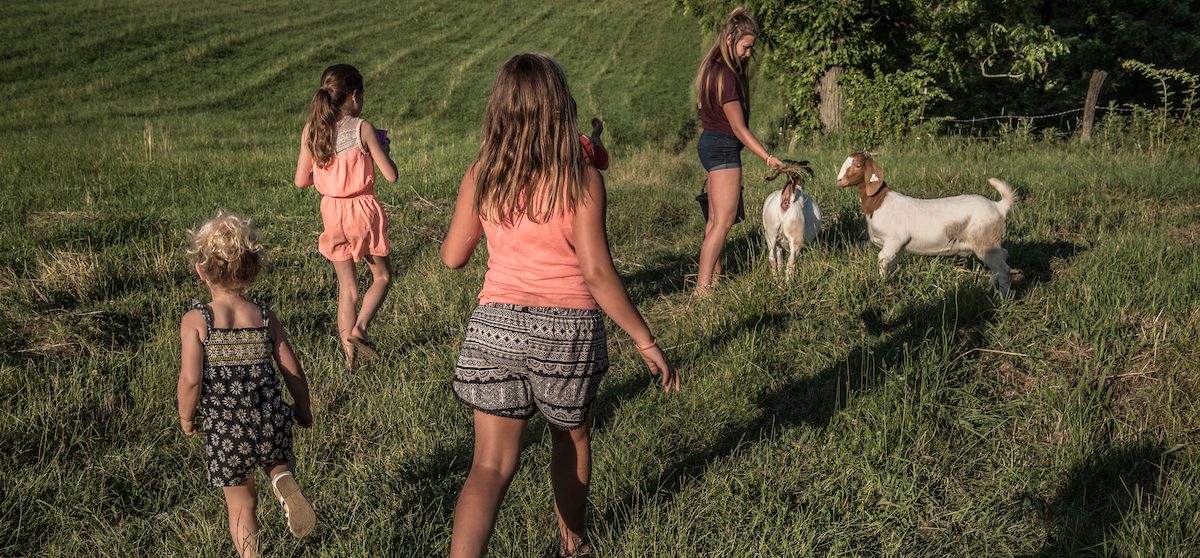 But the advent of fracking, which has brought drilling to their doorstep, is poking gaping holes in both their plans for the future and the fabric that binds their family together. These quiet farmers feel compelled to participate in township meetings and become versed in the minutiae of local and state permitting. They now attend citizen meetings focused on making sure MarkWest and ETC follow the law and are transparent and accountable to the community. But they also have relatives and neighbors who disagree, and who welcome the income, however modest, generated by leases. Like with all families, being on the opposite side of emotional issues can be polarizing, and stressful. What the Durans are experiencing is not an isolated case. Oil and gas companies are pitting family member against family member and neighbor against neighbor, all in the name of drilling for gas in communities like Smith Township, where nothing but farming preceded it.
For the Durans, it’s unclear whether they’ll be able to stay on the farm, whether Dan’s unborn son will be molded by the land as his father before him so clearly was. Even if they pooled their resources to move away from the fracking and drilling, they’re clear about the fact that there’s not enough to start again, someplace else, where they could remain together.
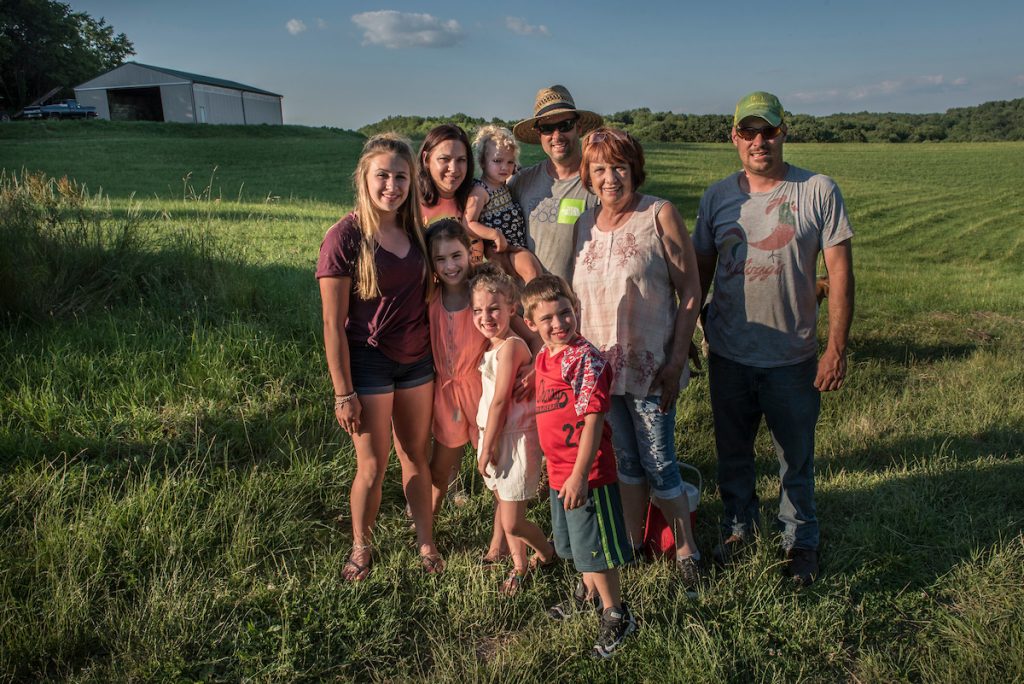
“If those plants come in,” Vicki challenges, rapping her fingers on the countertop, “this family will be split like a log.”
There is no more poignant evidence of the uncertainty in their lives than the fact that Dan and Sam are afraid to spread their father’s ashes on the farm. “We’re afraid we won’t be here,” Dan explains as he peers out the window of his nearly finished home. They can’t bear to be separated from him. But despite the worry in their eyes, one thing is very certain: these are resilient people. They are fighting back bravely – by engaging with their community and speaking out against the big oil and gas companies, and by their decision to proceed with their lives, to continue building for their future, on their farm, with each other by their side. “I’ve got living left to do,” Vicki concludes. “They’ve destroyed our water – we can’t drink it, they’re about to destroy our air, but we have to keep on going.” In case that wasn’t evident enough, she pulls out her iPhone and checks in with a dating site she recently joined. “This one’s a farmer,” she smiles. “And he’s kind of cute, don’t you think?”[/vc_column_text][vc_column_text][sgmb id=”3″][/vc_column_text][/vc_column][/vc_row]
