


[vc_row][vc_column][vc_empty_space height=”12px”][vc_column_text]
What We Do >> Oil and Gas >> The Human Cost of Energy Production >> Fracking >> Nadine and Paul
[/vc_column_text][vc_column_text]
Winery Owners Fear Fracking Will Poison Tourism
The kitchen of Nadine Grabania and Paul Roberts looks down upon rows of neatly lined grape vines that dip and rise along rolling terrain.
The air is surprisingly cool on this summer day and it’s mesmerizing to watch the breeze as it gently stirs the landscape. Nadine and Paul own and operate Deep Creek Cellars, a sustainable artisan winery in Friendsville, Maryland, which is in Garrett County, the state’s western-most. They also are intimately involved in the effort to extend the existing moratorium on fracking in Maryland. As it stands now, the moratorium is set to expire in October 2017, opening the door for the industry to rumble south from Pennsylvania into Maryland and shatter the quality of life that people like Nadine and Paul cherish.
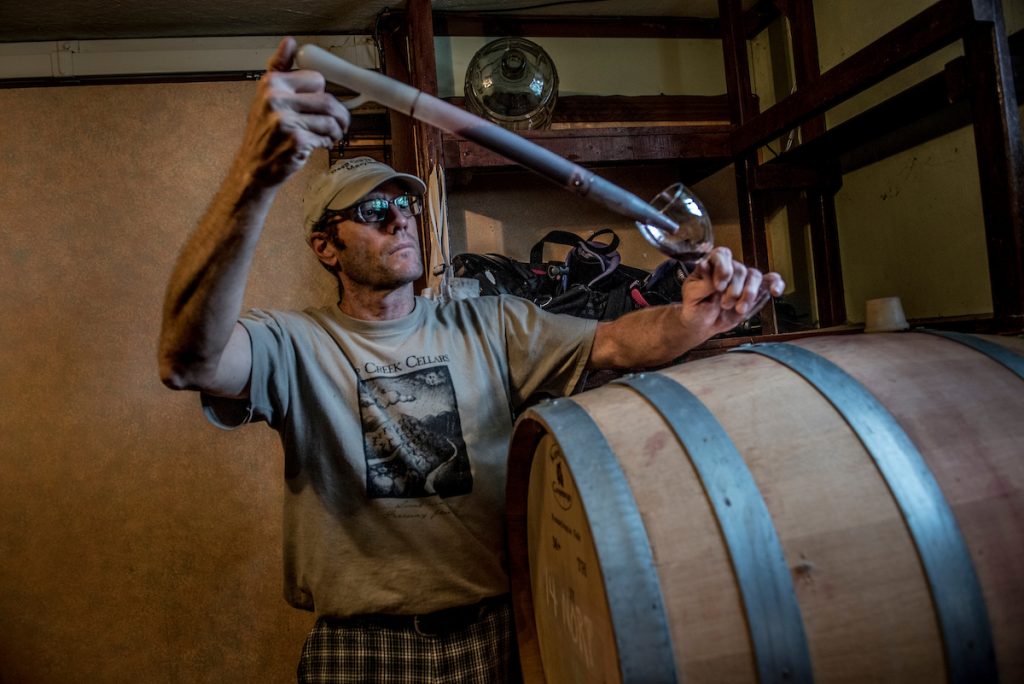 Together with their 16-year old daughter, Nadine and Paul have deliberately constructed a peaceful, productive, and environmentally respectful way of living and working. Their home sits nestled above the winery, where they produce about 10,000 bottles of fine dry table wines each year. It’s an oasis worth protecting and they are all too aware that their idyllic life in Friendsville is only a stone’s throw from their neighbor state of Pennsylvania, and what many view as fracking’s ground zero. For now, western Maryland remains untouched by the drilling rigs, well pads, compressor stations, truck and rail traffic, and the enormous processing plants that have overrun western Pennsylvania like an insidious plague.
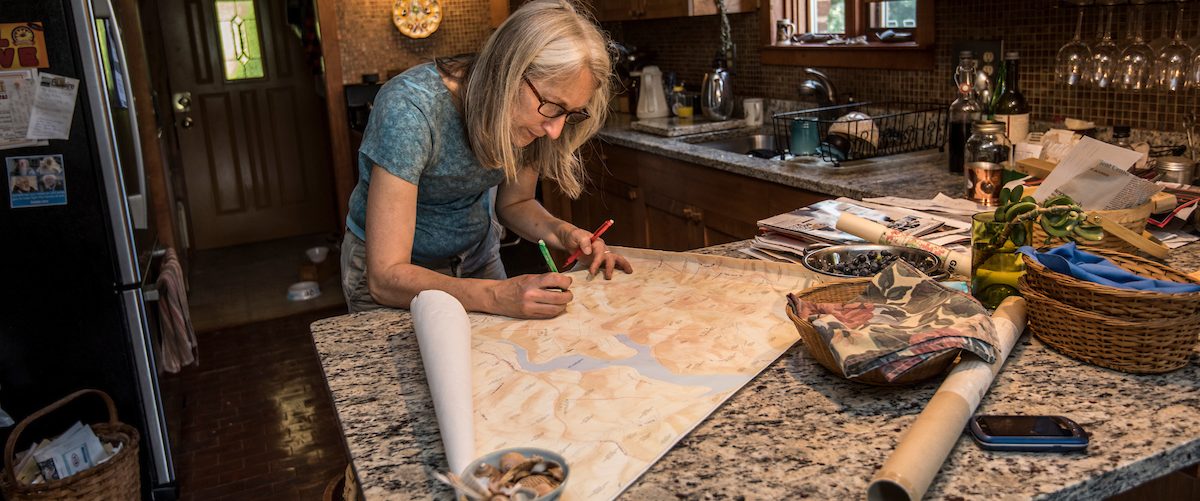
At 58, Paul is open and friendly, and eager to talk about their lives and what the threat of hydraulic fracturing means to them. Wearing work clothes permanently stained with wine, he invites a brief tour around the house before jumping into conversation. Their home is comfortably packed with books and interesting tchotchkes; it feels warm and inviting. On the kitchen counters rest a colander full of fresh berries, lots of cookware and utensils, and one very large map of northern Garrett County covered with sticker dots. The map feels out of place in this respite-like setting but Paul and Nadine track the locations of gas leases across the county, as well as proposed shale development sites. They feel they have no choice. Fracking was temporarily banned by gubernatorial order in 2011 but the moratorium will be lifted in October 2017 unless state lawmakers pass a bill to extend the ban or make it permanent.
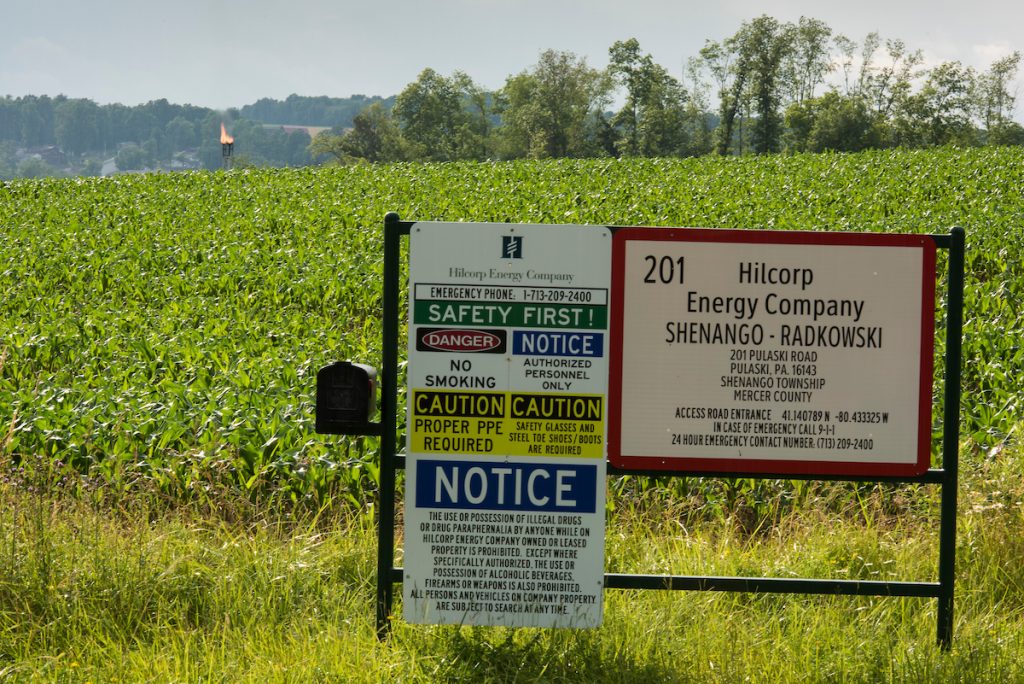
 Garrett County overlies a relatively small part of the Marcellus Shale gas formation and oil and gas companies, first Chief, Samson, and Enerplus, and more recently Chevron, Lodge, and XTO, for years have been circling like buzzards to snatch up as many oil and gas leases across the countryside as possible. The county abuts the Pennsylvania and West Virginia borders and the pipelines needed to move the gas are already in place – ready and waiting – just over the Mason-Dixon line. According to Paul, there were once more than 125,000 acres already leased in Garrett County, and more than half of those were leased by Chief prior to the moratorium. Chevron has more recently acquired most of those leases, on a speculative basis; some (but not all) have been allowed to expire.
For Nadine and Paul, fracking is a direct threat to their lifestyle, to their business, and to the recovering economy of Garrett County. “Cheap gas prices,” Paul explains as he resettles his horned-rimmed glasses, “are also impeding the transition to greater reliance on renewable energy.” Pausing to find the right words, he adds, “Americans – some Americans – can be very short-sighted in their thinking.”
 As though pushing his frustration aside, he pivots next into the story of how he and Nadine came to be winemakers. Paul had apprenticed for a time in Napa Valley before the two met. “On our wedding day,” he smiles boyishly, “I shared my dream of opening a winery with Nadine.” Fifteen years later, when Paul suggested the time was right, Nadine was dismayed. She thought it was fanciful thinking, not anything he ever seriously planned to pursue. “But on that front,” he grins as he tilts back his chair, “she was dead wrong.” After success with a first vineyard in Scenery Hill, Washington County, PA, Paul eventually convinced Nadine that he was serious and in 2000, after “some debate”, they said goodbye forever to Nadine’s hometown of Pittsburgh and moved to Friendsville.
“We both walked away from our previous professions, dipped into our savings, and did the back to the land thing. It wasn’t like in the 70s,” he explains. “No one was really doing that in the 90s anymore. We wanted to escape the city and the pressures and the toxic environmental conditions of urban life.” According to Paul, they’ve been making wine, loving life, and raising their daughter ever since. “We used to wake up in the morning and smell the NOx at rush hour. Not anymore.”
Although appealing, their story is not unique. Garrett County has been reinventing itself for years, and people like Paul and Nadine are critical players in the storyline. Deep Creek Cellars, farm to table restaurants, recreational businesses such as white-water rafting and fly-fishing, organic farms and second-home and retirement real estate – these are just some of the pursuits taking hold in the area. These news businesses are helping to transform a beautiful but economically challenged, rural county into one whose economy is increasingly enriched by recreation, tourism, and sustainable industries.
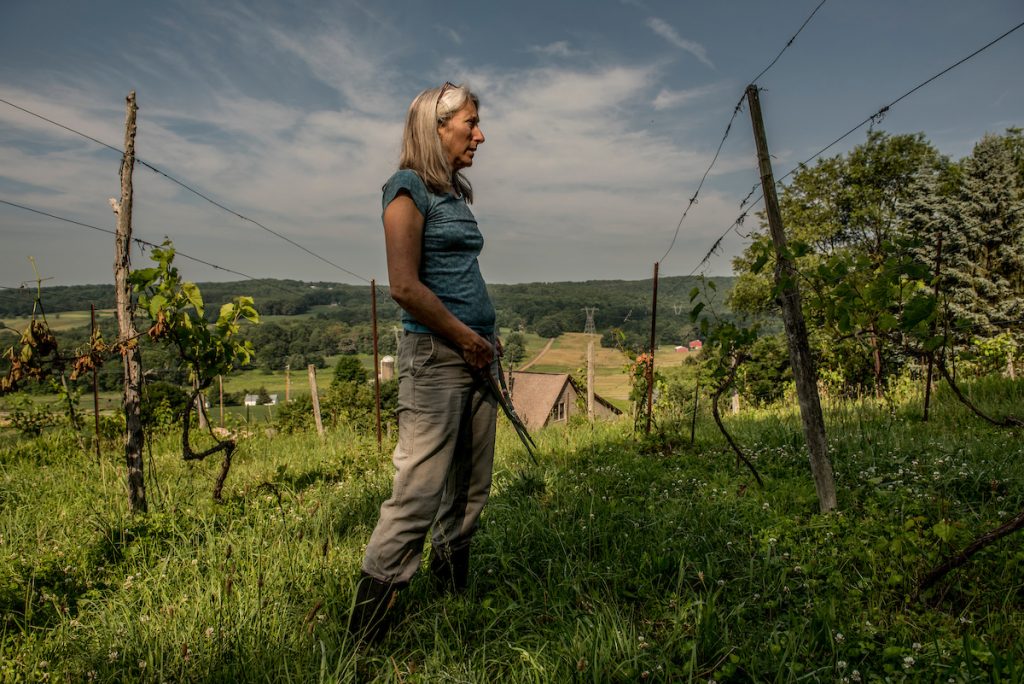
Over the years, though, as it became clear to Paul and Nadine that Garrett County was increasingly vulnerable to fracking, they began to weigh their options. Leases were being sold all around them, neighbors and fellow residents were signing up in exchange for the hope and promise of financial gain. Meanwhile, Paul and Nadine were worried about truck traffic and harmful air and water pollution, with special concern for Nadine’s asthma. Unlike so many others, they didn’t sign a lease. “But we did want out,” Paul admitted. “We knew if we stayed, our property value would decrease, our winery would be put in jeopardy, and all that we worked for would be under siege.”
So they went to work instead, this time channeling their considerable energies and talents into taking on the fracking industry, and the politics that enable it. In 2011, then Governor O’Malley asked Paul to be a citizen representative on the Marcellus Shale Safe Drilling Initiative Advisory Commission, which was tasked with assisting state lawmakers in determining whether and how fracking could be accomplished safely in western Maryland. “It was pro-drilling from the start,” Paul says. Despite the addition of a few conservation and watershed protection advocates, the members, according to Paul, remained extremely divided by the issues. Although the commission disbanded with Governor Hogan’s election in 2014, Paul and Nadine, along with a few trusted colleagues, had already formed Citizen Shale, a nonprofit organization whose mission is to educate and protect individuals and communities from the harmful impacts of shale gas development.
When not occupied with wine-making and viticulture, Paul and Nadine increasingly have turned their attention to keeping fracking out of western Maryland. As part of Citizen Shale, they tirelessly work to educate the public and lawmakers about the risks of and the renewable alternatives to fracking. What may have started as an effort to protect their business and their family’s health and safety has blossomed into a nearly full-time effort. As the moratorium’s clock winds down, Citizen Shale has shifted into even higher gear, working around the clock as a partner with the Don’t Frack Maryland coalition toward a statewide legislative ban, while also supporting local town ordinances that ban fracking, like the one passed in Friendsville this past July.
“I want to leave this [the land] for our daughter,” Paul laments. “When she was younger she felt a little reined in by living in the country – but she’s growing up. She’s appreciating what we have more and more.” He admits though, that he and Nadine still feel stuck in a crossroads when it comes to their next move. Should they stay, and drilling proceeds, Paul worries that it will not only be an unsafe place to live, but also that it may be too late to recoup their family’s investment. “If the ban is lifted, and prices go back up, the gas companies will want to swoop back in and claim their leases.”
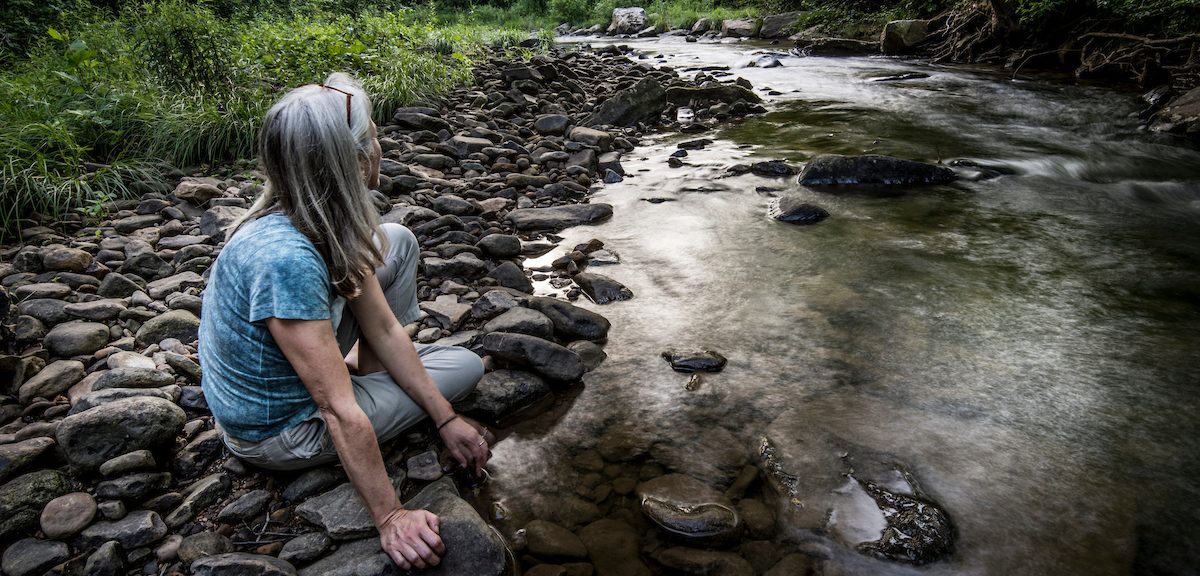 What he knows for sure is that he no longer wants to live in Garrett County, his cherished home for the last 19 years, if fracking comes to town. “Our daughter wants to go to school in New York,” he shares. “Maybe we’ll move to that state – at least there’s no fracking there.”
But he’s not giving up on the idea of a permanent ban on fracking in Maryland – and he and Nadine have proven their ability to turn dreams into reality. Alongside their colleagues at Citizen Shale, as well as people across the state who envision a cleaner, more sustainable future for Maryland, it’s safe to bet that they’ll continue and win this fight. [/vc_column_text][vc_column_text][sgmb id=”3″][/vc_column_text][/vc_column][/vc_row]
